


Diwali Pooja Vidhi: Step-by-Step Guide to Lakshmi Pooja 2026
Diwali, the Festival of Lights, is one of the most widely celebrated festivals in the Hindu community, known for its rich traditions, festive spirit and cultural significance. It marks the return of Lord Shri Ram to Ayodhya after defeating Ravana, when the people lit lamps to welcome him home.
The 5 days of Diwali begin with Dhanteras, followed by Naraka Chaturdashi (with the Abhyanga Snan), then Lakshmi Pooja on the main day, Govardhan Pooja, and finally Bhai Dooj. Each day has its own significance, but the Mahalakshmi Pooja holds a special place. Goddess Lakshmi, the goddess of wealth and prosperity, is believed to visit clean, well-lit homes on Diwali night and bless the family.
In 2026, Lakshmi Pooja falls on Sunday, 8 November. This guide takes you through the preparations, the Lakshmi Pooja muhurat and the full step-by-step vidhi, so you can perform the ritual correctly and with devotion. For the full festival calendar, see our Diwali 2026 date and timings guide.
Significance of Laxmi Puja Vidhi:
Lakshmi Pooja is performed to invite wealth, good fortune, prosperity and happiness into the home. It is believed that Goddess Lakshmi showers her blessings on those who worship her with sincerity and devotion. The pooja is performed on the Amavasya (new moon) night of the Hindu month of Kartik, the third day of Diwali.
According to the scriptures, this was the night when Goddess Lakshmi emerged from the Kshir Sagar (Ocean of Milk) during the Samudra Manthan. Lighting lamps is believed to light her path through the darkness. The pooja also symbolises the triumph of light over darkness and knowledge over ignorance, as homes are lit with diyas and decorated with rangoli to invite positive energy.
Preparations for Diwali Pooja Vidhi:
The pooja is performed in the evening during Pradosh Kaal, after sunset, while the Amavasya tithi is present. Timings depend on your city’s sunset. Approximate muhurat timings (IST) for 8 November 2026 are:
- Delhi: approx. 5:47 PM to 7:13 PM
- Mumbai: approx. 6:18 PM to 7:44 PM
Some panchangs also suggest a longer window or a Vrishabha Lagna window, so check your local panchang or temple for the exact time in your city.
Getting ready
- Clean the home thoroughly. Goddess Lakshmi is believed to visit homes that are clean and clutter-free, so remove dirt and unused items well before the pooja.
- Choose a clean, sacred space for the pooja, preferably in the north-east (Ishan) corner of the home, and spread a clean cloth or mat.
- Decorate with diyas, candles and lights, and make a beautiful rangoli at the entrance. Read about the significance of rangoli in Diwali celebrations for meaning and design ideas.
- Bathe and wear clean, traditional clothes. Many families also fast until the pooja is complete, but this is optional.
Pooja samagri (items needed)
- A clean idol or picture of Goddess Lakshmi and Lord Ganesha
- A kalash (copper or brass pot) filled with water, with mango leaves and a coconut
- Fresh flowers, preferably marigold, and lotus if available
- Fruits and sweets for prasad
- Betel leaves and betel nuts
- Coins, or gold and silver items
- Turmeric, kumkum, rice (akshat) and roli
- Ghee or oil for the diyas, along with cotton wicks
- Incense sticks and camphor
- A new account book (for business owners)
Step-by-Step Guide For Lakshmi Puja Vidhi on Diwali
1. Purification (Shuddhi) of Space and Self:

Before you begin, purify yourself and the pooja space. Sprinkle a little Ganga Jal (holy water) in the pooja area and around the house, wash your hands and feet, and wear clean, traditional clothes. Sit facing east or north. Take a sankalp, a simple vow, by stating your name, your family’s well-being and your intention to worship Goddess Lakshmi with devotion.
2. Invocation of Lord Ganesha:

By Hindu tradition, any pooja begins with Lord Ganesha, the remover of obstacles. Light a diya and incense, then offer flowers, sweets and a coconut to him. Chant the Ganesh mantra “Om Gan Ganapataye Namah” to clear hurdles and make the pooja successful.
3. Establishing the Kalash:

The kalash is a symbol of prosperity and abundance. Fill a clean copper or brass pot with water and place five mango leaves around its mouth. Top it with a coconut wrapped in red cloth or marked with kumkum. You may also put a coin, a few grains of rice, turmeric and a betel nut inside the water. Place the kalash in front of the idols or pictures of Goddess Lakshmi and Lord Ganesha.
4. Worshipping Goddess Lakshmi:

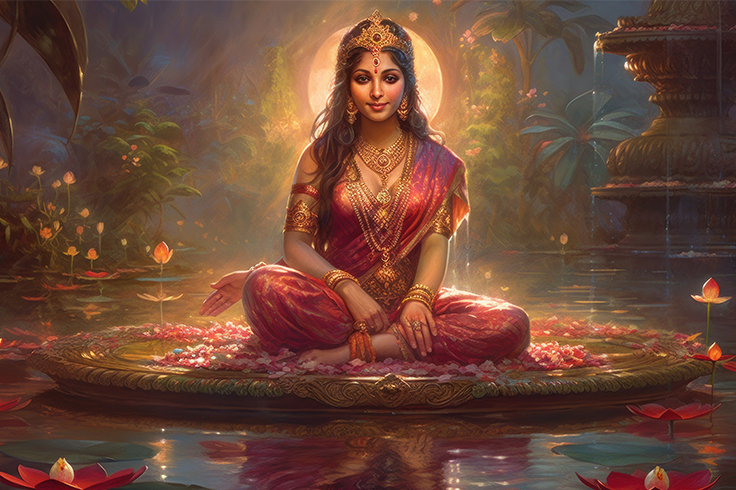
For the main part of the Laxmi Pujan, apply kumkum and turmeric to the goddess and offer fresh flowers, especially lotus, along with fruits, sweets and betel leaves. Light the diyas in front of her idol or picture and chant the Lakshmi mantra “Om Hreem Shreem Lakshmibhyo Namah” with devotion. Then sing the Lakshmi Aarti, inviting the goddess into your home. Ringing a bell, blowing a conch or clapping during the aarti is traditional.
5. Offering Naivedya:

Offering bhog is an essential part of the pooja. Offer sweets, fruits or a special dish to Goddess Lakshmi and Lord Ganesha as naivedya. Laddoo, modak, peda, kheer and puffed rice (lahi or murmura) are commonly offered at Lakshmi Pooja.
6. Perform Dhan Lakshmi Pooja:

For Dhan Lakshmi or Mahalakshmi Pooja, place coins, gold or silver items and your cash or valuables on a clean plate and offer them to the goddess with kumkum, rice and flowers. Many families also worship Lord Kubera, the guardian of wealth, at this time. Business owners perform Chopda Pujan, worshipping the new account books with a swastika and the words “Shubh Labh” written on them, to seek blessings for the new financial year.
7. Light Diyas Around the House:

After the pooja, light diyas throughout the home. Place them in every room, at the entrance, near the Tulsi plant and in the corners, so that no part of the house is left dark. This is done to dispel darkness and invite the goddess into every space, and the lamps symbolise divine presence, peace and prosperity.
8. Recite Lakshmi Chalisa and Aarti:

To complete the pooja, recite the Lakshmi Chalisa or sing the Lakshmi Aarti once more. It is a devotional hymn of gratitude to the goddess and a prayer for continued prosperity, and it brings the whole family together in prayer.
9. Distribute Prasad:

After the pooja, share the prasad offered to the goddess with all family members, neighbours and guests. The prasad carries her blessings and is shared as an act of goodwill.
10. Closing Rituals:

Finally, bow before the goddess and seek her blessings for the year ahead. Keep the coins and valuables used in the pooja in your safe or cash box, as is traditional. The pooja ends with the family sharing a festive meal and celebrating Diwali with love and joy.
Things to Remember During Lakshmi Pooja
- Complete the pooja within the muhurat for your city.
- Keep the pooja space clean and well lit, and keep the diyas burning through the evening.
- Offer a lotus or marigold, and avoid offering withered or damaged flowers.
- Perform the pooja with a calm and devoted mind. Sincerity matters more than elaborate arrangements.
- If you cannot arrange everything, do not worry. A simple pooja with a lamp, flowers, sweets and sincere prayer is equally valid.
Diwali Pooja Vidhi is not just a ritual of wealth. It is a time to express gratitude, bring the family together and welcome positive energy. As you celebrate Diwali 2026, perform each step with love and devotion, and may Goddess Lakshmi bless your family with success, happiness and prosperity in the year ahead.
Read More Blogs:
- The Divine Love Story of Lord Shiva and Parvati
- The 10 Avatars of Lord Vishnu
- Top 10 Powerful Mantras in Hinduism That Can Transform Your Life
- Hanuman as Shiva’s Avatar: Exploring the Divine Connection